

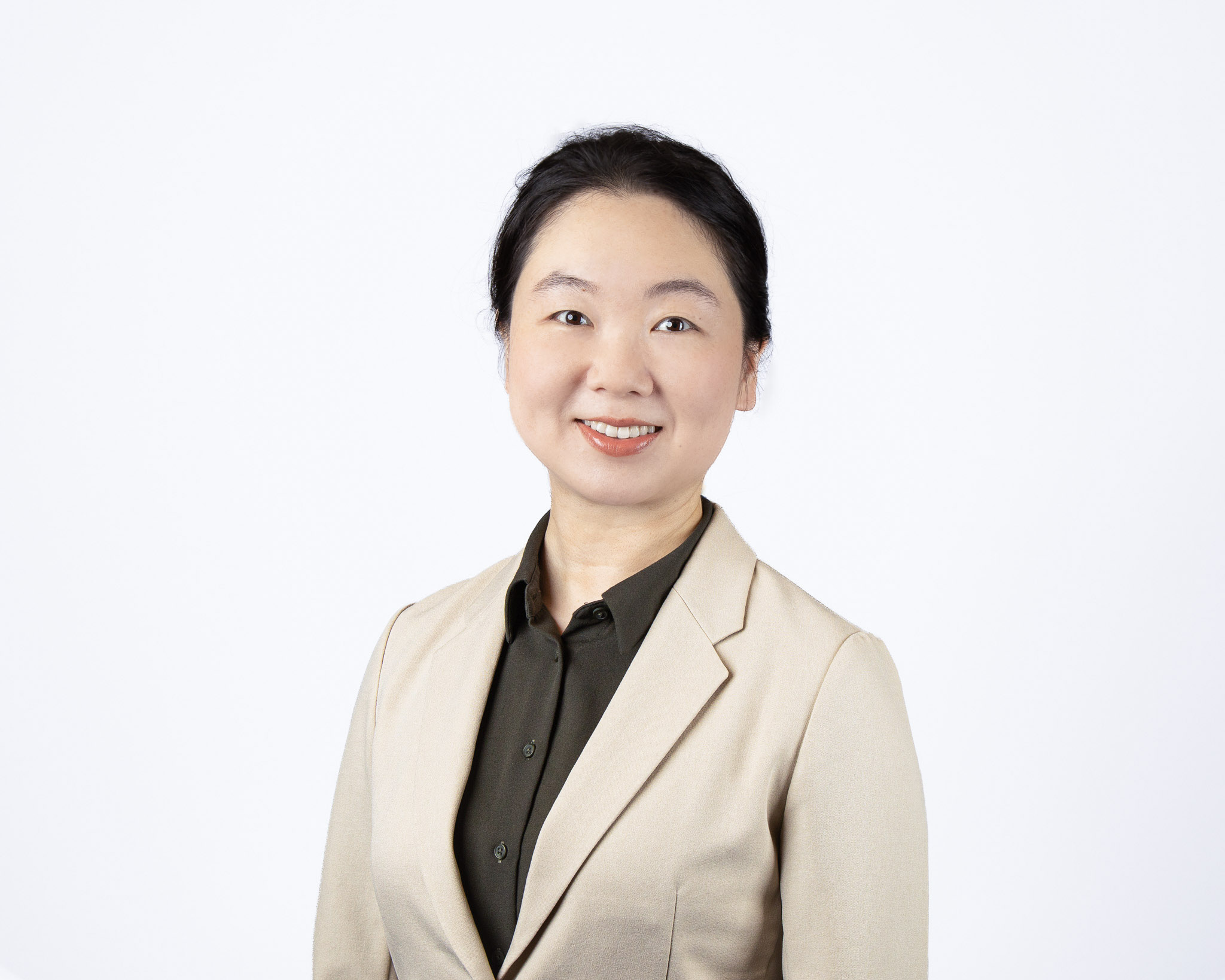
Changzhao Wang is an Assistant Professor of Foundations and Secondary Education at Indiana University South Bend (IUSB). She earned her Ph.D. in Teaching and Learning, with a specialization in STEM Education, from the University of Miami in 2023. Following graduation, she worked as a Postdoctoral Scholar at the University of Southern California. Prior to her academic career, she taught physics at the middle and high school levels and earned a Bachelor of Natural Sciences in Physics from Central China Normal University.
Dr. Wang’s teaching interests include educational technology, secondary education, STEM education, research methods, and the use of artificial intelligence (AI) to support teaching, learning, and assessment. Her research focuses on AI literacy and the use of educational technology to support STEM teaching, learning, and assessment. Her scholarship has been published in peer-reviewed journals, book chapters, and top-tier conference proceedings.
Research Interests
Dr. Wang’s research interests include STEM education; AI literacy and ethics; educational technology; and AI-supported teaching, learning, and assessment. Her research employs both qualitative methods (e.g., interaction analysis of learning process; thematic analysis of texts and discourse) and quantitative methods (e.g., statistical analysis of assessment data). Selected current and recent research projects include:
- Designing and studying an interdisciplinary AI curriculum for middle school students to support AI literacy and ethical understanding of AI;
- Investigating the development of student agency and gender equity in elementary math classrooms;
- Investigating college students’ experiences and perceptions of using AI in academic writing;
- Applying machine learning techniques to automatically assess students’ hand-drawn models of optics;
- Designing a sixth-grade interdisciplinary STEM curriculum (robotics + storytelling) and investigating students’ perceptions of robots from their class products;
- Conducting a semi-systematic review of research on the integration of computational thinking (CT) in STEM education;
- Examining how high school students code with socio-scientific data to tell stories about climate change
Recent Publications (Selected)
Wang, C. (2025, June). Supporting middle school students to learn AI through creative machine learning projects. In Rajala, A., Cortez, A., Hofmann, R., Jornet, A., Lotz-Sisitka, H., & Markauskaite, L. (Eds.), Proceedings of the 19th International Conference of the Learning Sciences - ICLS 2025 (pp. 1285–1289). International Society of the Learning Sciences. https://doi.org/10.22318/icls2025.504906
Wang, C., Secada, W. G., & Ran, H. (2025). The effects of Cognitively Guided Instruction on how teachers support the development of student agency. Discover Education, 4, 262. https://doi.org/10.1007/s44217-025-00719-9
Wang, C., & Kahn, J. (2024, June). “We did it we did it!”: Exploring middle schoolers’ collaborative learning in an online machine learning curriculum. Proceedings of the 17th International Conference on Computer-Supported Collaborative Learning – CSCL 2024 (pp. 273–276). Buffalo, USA: International Society of the Learning Sciences. https://doi.org/10.22318/cscl2024.218179
Wang, C., Aguilar, S., Bankard, J., Bui, E., & Nye, B. (2024). Writing with AI: What college students learned from utilizing ChatGPT for a writing assignment. Education Sciences, 14(9), 976. https://doi.org/10.3390/educsci14090976
Wang, C., Zhai, X., & Shen, J. (2024). Applying machine learning to assess paper-pencil drawn models of optics. Uses of Artificial Intelligence in STEM Education. Oxford, UK: Oxford University Press. https://doi.org/10.1093/oso/9780198882077.003.0005
Wang, C., Shen, J., & Ran, H. (2023). Imagining robots of the future: Examining six-graders’ perceptions of robots through their literary products. Journal of Research on Technology in Education, 55(4), 684–709. https://doi.org/10.1080/15391523.2022.2030264
Jiang, S., & Wang, C. (2023). Blurring the boundaries of current and future selves: Students’ STEM identity exploration in a multimodal composing learning environment. Learning, Media, and Technology, 48(4), 596–611. https://doi.org/10.1080/17439884.2023.2225858
Wang, C., Shen, J., & Chao, J. (2022). Integrating computational thinking in STEM education: A literature review. International Journal of Science and Mathematics Education, 20, 1949–1972. https://doi.org/10.1007/s10763-021-10227-5